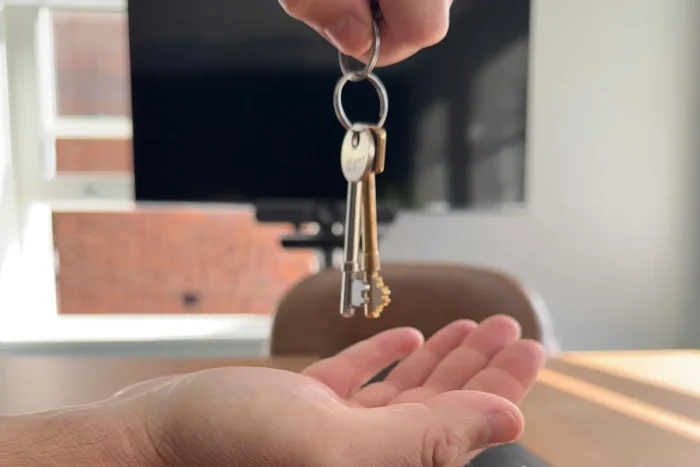
There is a simple question that gets to the heart of saleability: could somebody else pick this business up and carry on without you?
For many founders, that is uncomfortable because being essential is part of how they built the company. They were the best salesperson, the person who knew every customer, the person who negotiated the contracts, had the most in-depth technical knowledge, skills and experience and often the person who knew how to solve the difficult operational problems. In the early years, that is normal.
The problem starts when the business grows but the dependency does not reduce
A buyer is not only assessing what the company has achieved. They are assessing what survives the handover. If the founder intends to step away and the important client relationships, sales capability, decision-making and operational knowledge leave at the same time, the buyer has a real problem.
The same is true when processes are undocumented. If service intervals, customer communication, onboarding and job management are held together by spreadsheets, personal reminders and what a few long-standing employees happen to know, the business may work today but be difficult to transfer.
Transferability is visible in the management team
A proper management team is one of the clearest signs that the business has moved beyond the founder. That means people who genuinely run parts of the company, own decisions, manage customers and lead teams. It does not mean adding senior titles while the founder still approves everything.
For an owner who wants to sell or take a back seat, that distinction matters. A buyer wants continuity. The stronger the people staying in the business, the easier it is to believe that the revenue and relationships can stay with it as well.
Transferability is visible in the systems
A good CRM / ERP etc., accurate data and documented processes all make the company easier to understand. A buyer should be able to see the customer base, the different types of revenue, the sites served, the work delivered and the way the organisation operates without having to reconstruct the story from multiple people.
The purpose of systems is not to tick a box. A system that nobody uses has no value. The point is to make knowledge and information part of the company rather than property of the founder.
Reducing dependency does not reduce the founder’s importance
Some owners resist delegation because they know they can do the job better or faster themselves. They are often right. But leadership eventually means getting other people to take responsibility and develop. If nobody else is allowed to own anything important, nobody else becomes capable of owning anything important.
The goal is not to make the founder irrelevant. It is to create a business whose value does not disappear when the founder decides to leave. That is what makes a company transferable, and transferability is fundamental to a successful sale.

For further information please contact us at info@leithma.co.uk or call 01306 272 200 in the strictest of confidence.